Sandbagging for Cyclone Narelle

April 22, 2026

Filling thousands of bags in preparation for potential impact of Severe Tropical Cyclone Narelle.

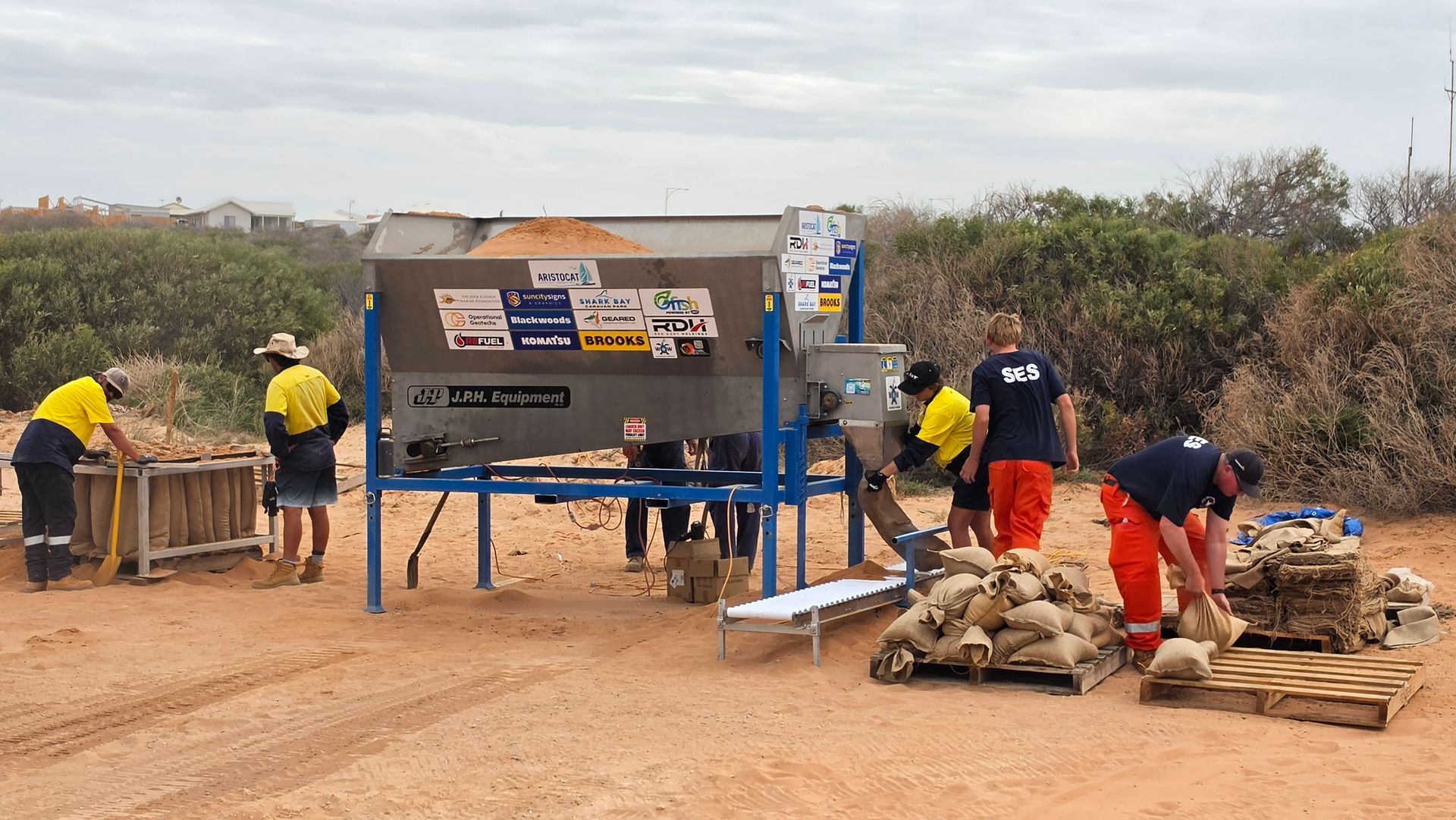
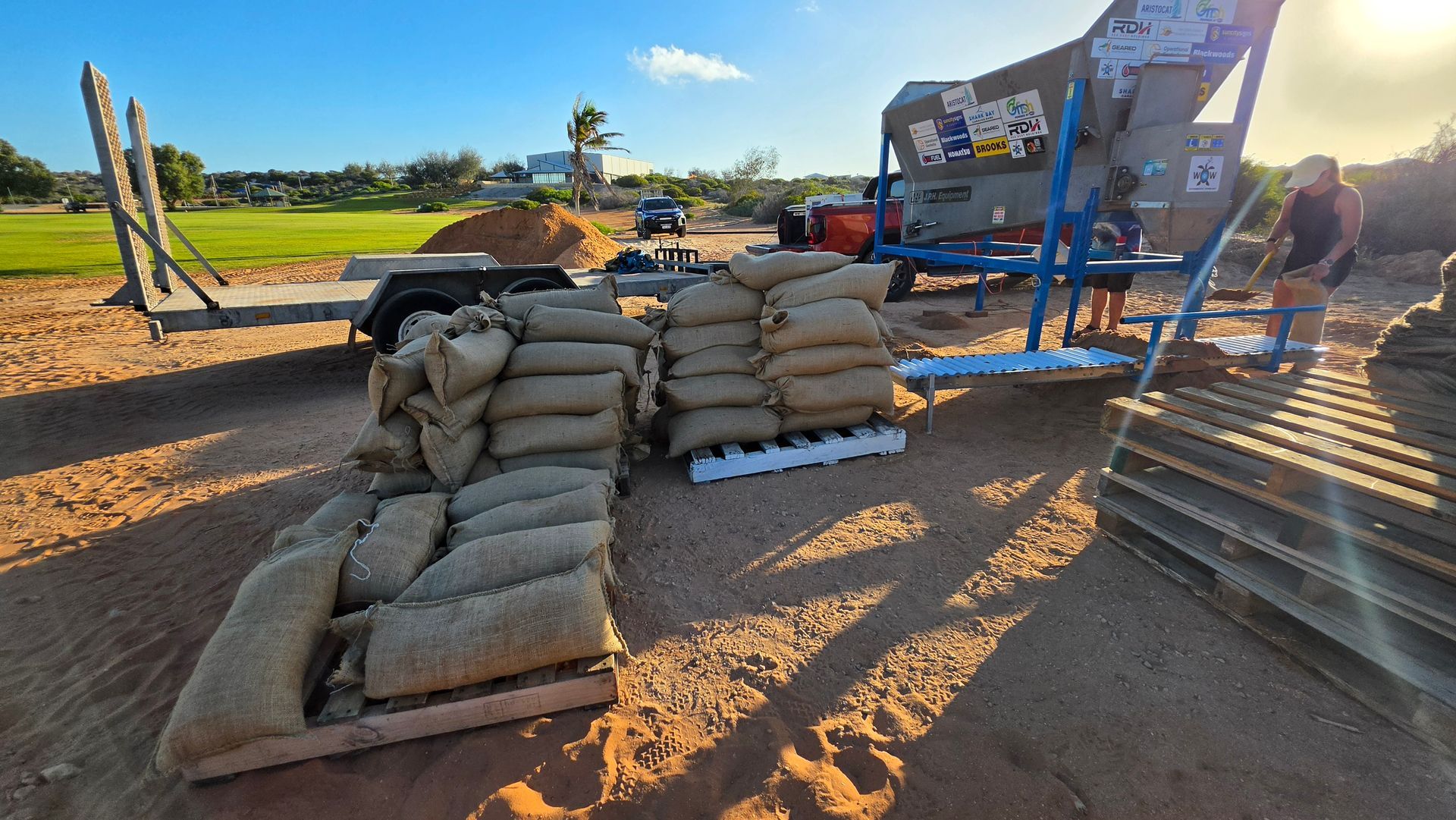
In the past, sandbags were filled manually, a time-consuming and arduous task. However, the introduction of the sandbagging machine operated by volunteers and State Emergency Service workers provided a steady stream of sandbags, which were collected by both residents and Shire workers. Consequently, buildings in Monkey Mia and Denham were fortified to prepare for the expected rainfall and tidal surge as the cyclone moved through the Bay.


Historically, filling a single sandbag by hand with a shovel takes a fit individual approximately one to two minutes. When you consider that a standard residential barrier might require hundreds of bags, and a community-wide protection effort requires tens of thousands, the manual approach often falls short of the demand. The sandbagging machine used during the threat of Severe Tropical Cyclone Narelle could produce bags at a rate of roughly 500 to 800 per hour depending on the number of chutes in operation. This efficiency ensures that the State Emergency Service (SES) and local volunteers can provide a steady stream of protection for both private homes and public infrastructure without the risk of physical exhaustion or repetitive strain injuries. You can read more about our community initiatives on our News page.

Industrial Sandbagging Machine

How did Narelle impact the Shark Bay community?

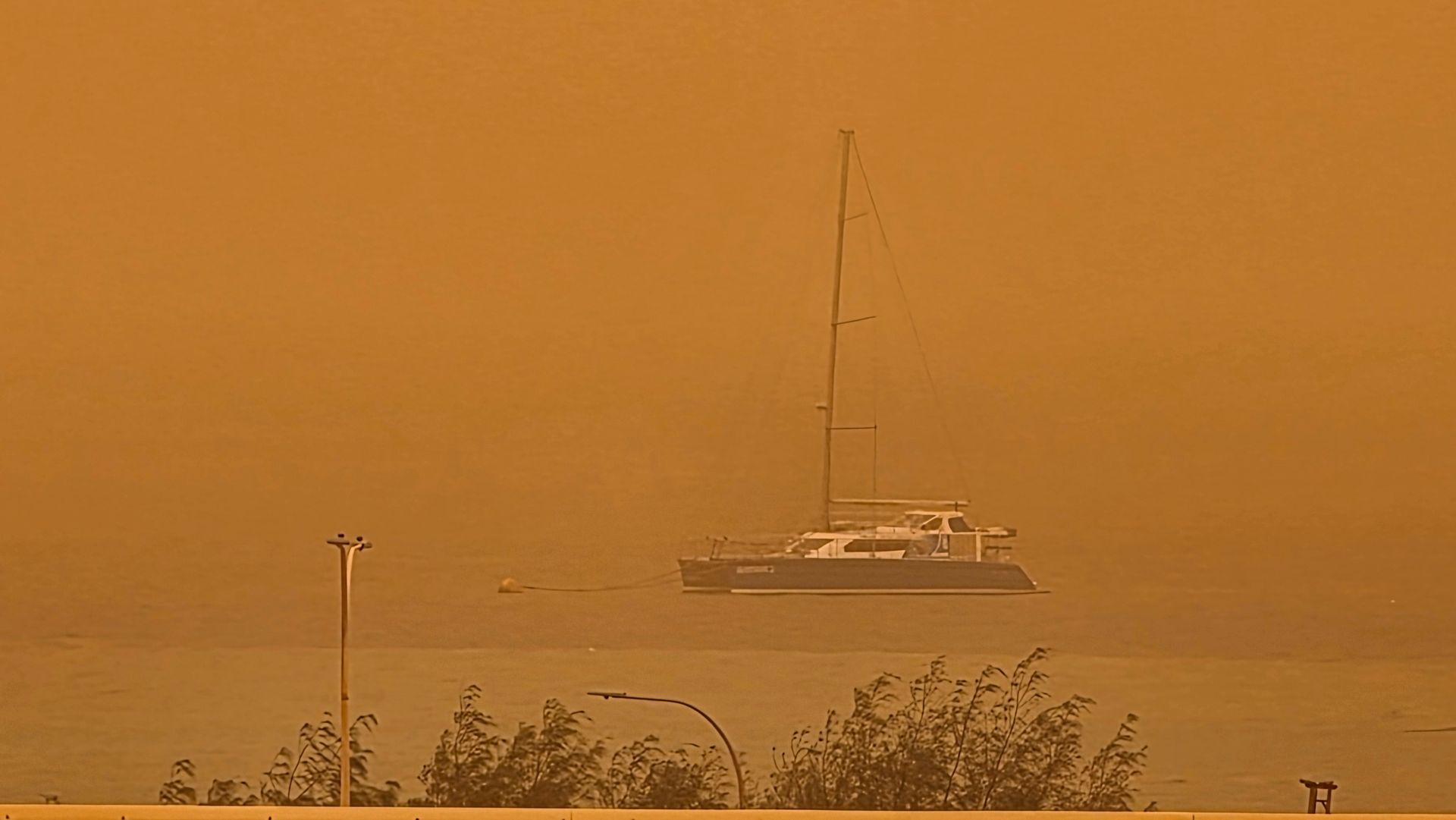
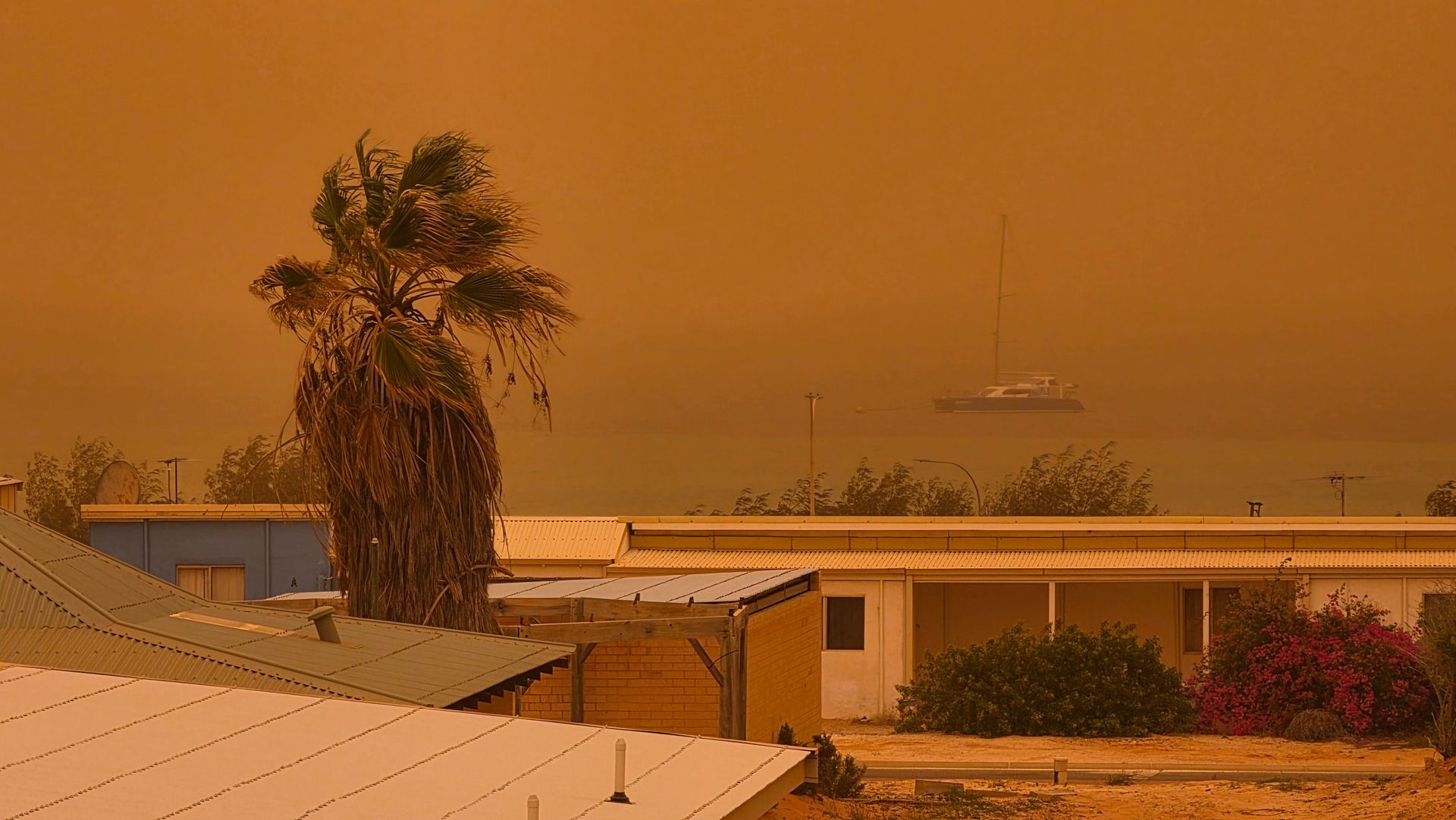
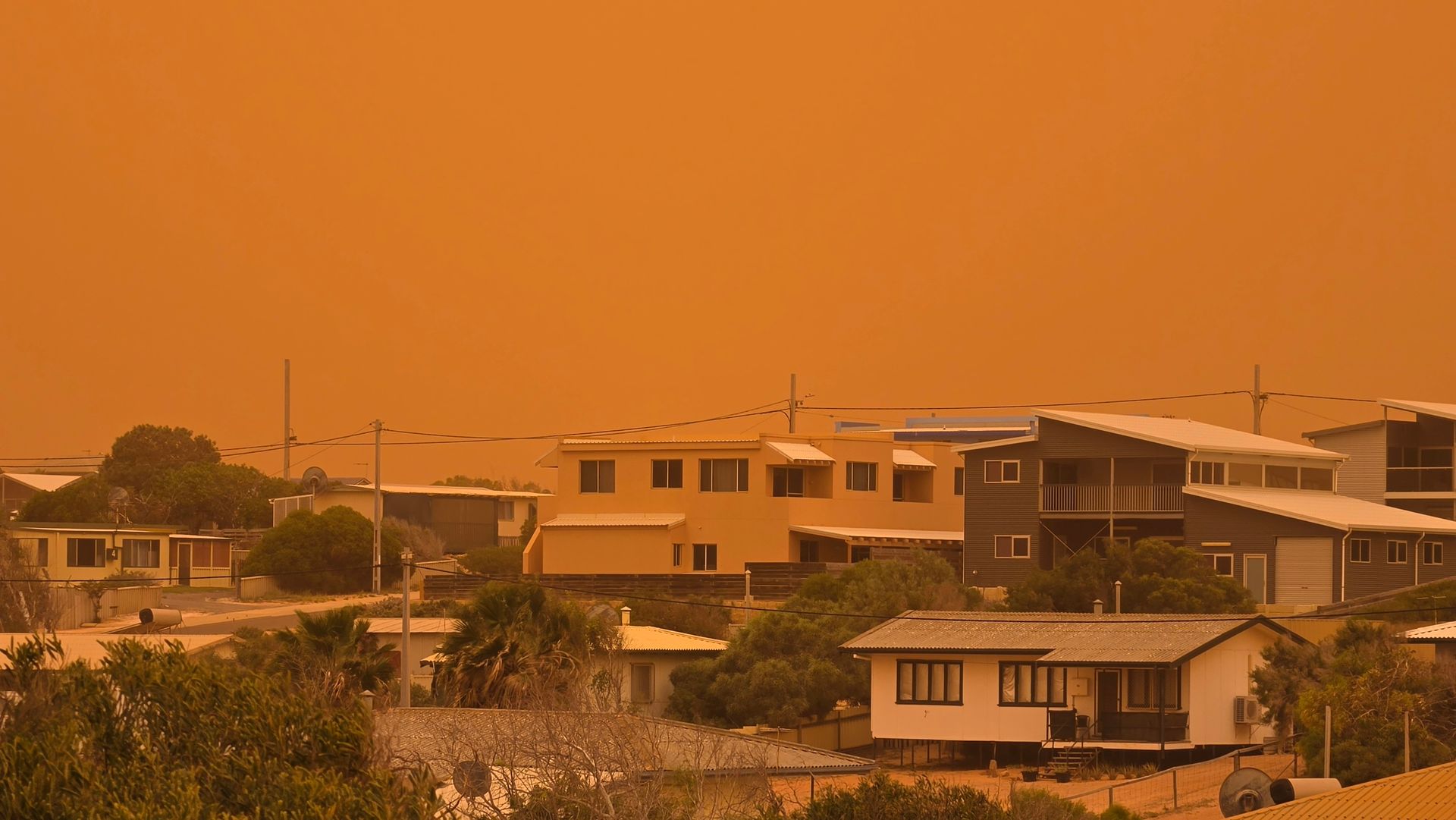
Severe Tropical Cyclone Narelle was a formidable weather system that tracked down the Western Australian coast, bringing with it the threat of destructive winds and, more importantly for the low-lying areas of Monkey Mia, a dangerous storm surge. For those living in the Shark Bay region, the memory of such events remains a reminder of the raw power of the Indian Ocean. The impact of Narelle was felt most through the anticipation of its path; as a Category 4 system at its peak, the potential for coastal inundation was high. Residents were tasked with securing their properties against both wind and water, a dual-fronted battle that requires significant preparation time.

The Shark Bay community is tight-knit, but even the strongest community spirit can be overwhelmed by the sheer volume of work required to prepare for a cyclone of this magnitude. When the alert levels rose, the call went out for volunteers to assist the SES. The sandbagging machine became the focal point of this effort. Instead of a chaotic scene of individuals struggling with shovels, the operation was streamlined and orderly. It allowed for a centralised distribution point where residents could drive up, load their vehicles with pre-filled bags, and return to their homes to secure their perimeters. This organised response reduced community anxiety significantly, providing a tangible sense of security during a period of extreme uncertainty. Understanding our local history and our mission is essential, and you can find more detail on our About page.

Efficiency in emergency response

The shift from manual labour to mechanical assistance during the Narelle response highlighted several key efficiencies. Firstly, the consistency of the sandbags produced by the machine is far superior to those filled by hand. When sandbags are used to build a wall, uniform weight and volume are crucial for stability. Hand-filled bags vary wildly, creating gaps in the barrier where water can seep through. The machine ensures that every bag is filled to the optimal level, creating a more effective seal against rising tides and flash flooding.

Secondly, the logistical flow of the emergency response was greatly improved. Because the machine could keep up with the demand, there were no long queues or frustrated residents waiting for supplies. This efficiency allowed SES workers to focus their attention on other high-priority tasks, such as clearing drainage systems and assisting the elderly with property tie-downs. The use of the machine manned by volunteers proved that technology, when paired with a willing community, can multiply the effectiveness of an emergency response tenfold. This level of coordination is something we strive for in all our environmental projects, including our seagrass restoration efforts which you can support via our Corporate Sponsors section.

Stormy Shark Bay Coastline

Why is rapid sandbagging vital for Monkey Mia?

Monkey Mia is a unique geographical location, famous for its shallow waters and vibrant marine life. However, these same features make it particularly vulnerable to storm surges. Unlike steep, rocky coastlines that can absorb the energy of a swell, the gentle slopes and sandy beaches of Shark Bay offer little resistance to a rising sea level. A storm surge associated with a cyclone like Narelle can push water hundreds of metres inland, threatening not only the tourism infrastructure but also the delicate balance of the coastal ecosystem.

Rapid sandbagging is vital here because it provides a temporary, removable levee that can protect specific high-value areas. Whether it is the local research facilities, the visitor centres, or the residential areas, having the ability to deploy thousands of bags in a single afternoon can be the difference between a successful recovery and a multi-million dollar disaster. Furthermore, sandbags can be used to divert runoff, preventing contaminated land water from flowing directly into the pristine bay, which is a key concern for any organisation dedicated to marine conservation.

Protecting our local seagrass habitats

While most people associate sandbags with protecting houses and businesses, our organisation views them as a tool for ecological preservation. As a not-for-profit focused on seagrass restoration, we understand that a major storm event can undo years of hard work in a matter of hours. When a cyclone hits, the intense wave action and sediment displacement can uproot seagrass seedlings and destroy the nurseries we have carefully cultivated on the sea floor. By using sandbags to stabilise the shoreline and reduce the amount of sediment being washed out to sea, we help maintain the water clarity that seagrass needs to thrive.

Seagrass is the lungs of our bay; it provides oxygen, sequesters carbon, and serves as a primary food source for the local dugong population. Protecting the coastline during a cyclone is therefore a holistic endeavour. If the land is protected, the near-shore environment suffers less trauma. The sandbagging machine, while a piece of industrial equipment, serves a deeply environmental purpose by ensuring the stability of the land-sea interface during extreme weather events. If you have questions about how we integrate emergency response with conservation, please visit our Contact page.

Volunteers and SES Working

Key Takeaways for Cyclone Preparedness:

  • Automation Saves Time: Machines can fill 500+ bags per hour, vastly outperforming manual labour during emergencies.
  • Consistency is Key: Uniformly filled bags create more stable and effective flood barriers against storm surges.
  • Community Coordination: Centralised filling stations allow for a smoother logistical flow for residents and SES workers.
  • Ecological Protection: Stabilising the coastline with sandbags prevents sediment runoff that can damage seagrass nurseries.
  • Volunteer Safety: Reducing the need for manual shovelling prevents physical exhaustion and long-term strain for the local workforce.

By reflecting on the response to Narelle, we can better prepare for future weather events, ensuring that Monkey Mia remains a safe and beautiful environment for both its human residents and its vital marine ecosystems.

By Liam Ridgley January 11, 2026
Latest update for 2026
Seagrass restoration Monkey Mia 2025
By Liam Ridgley July 17, 2025
Completed our seagrass restoration program for 2025 at the beautiful Shark Bay Monkey Mia
May 30, 2025
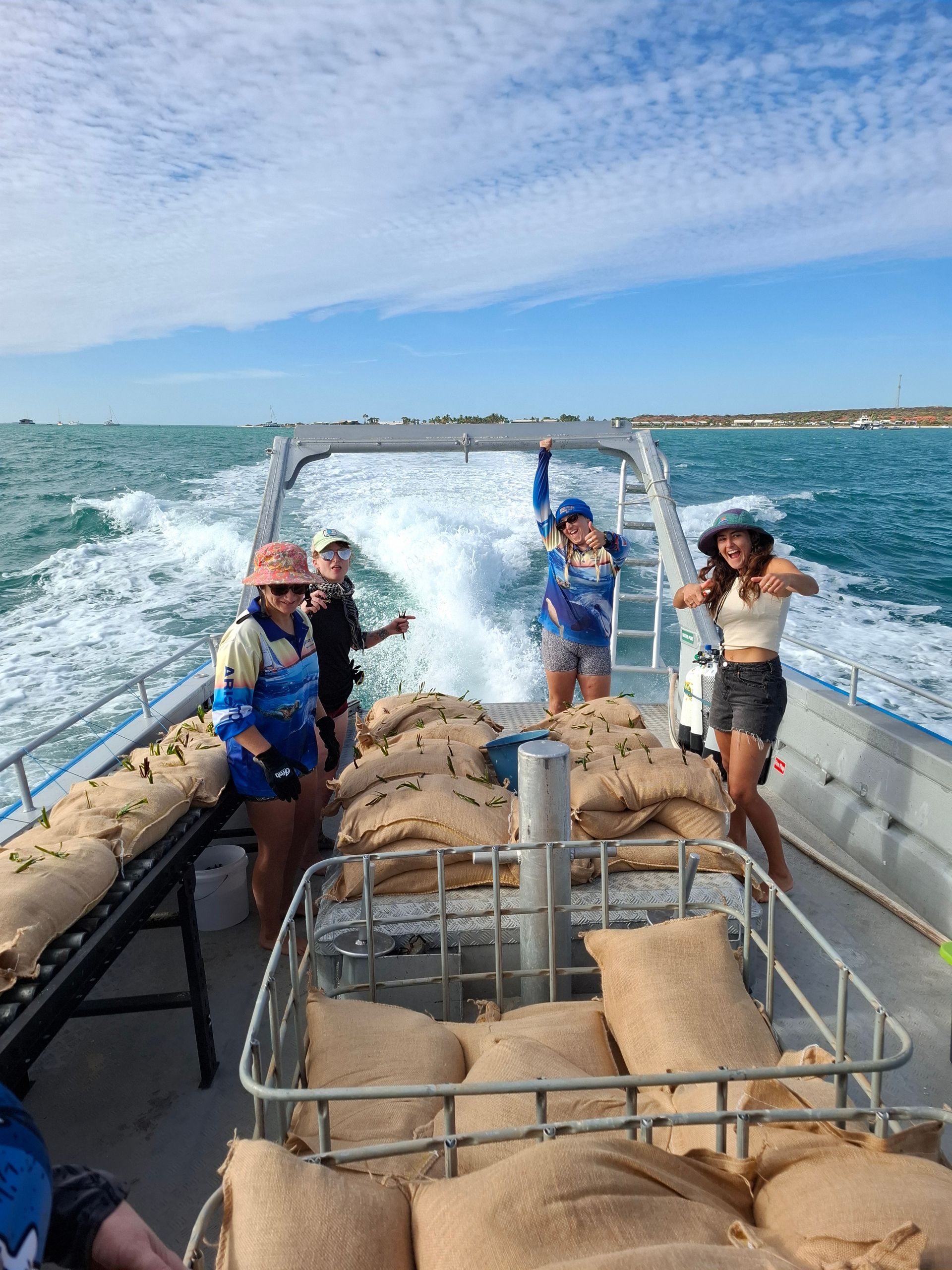
2025 has begun, we have 2000 sandbags to deploy with 4000 more still in application process.
By Jade Standen May 5, 2025
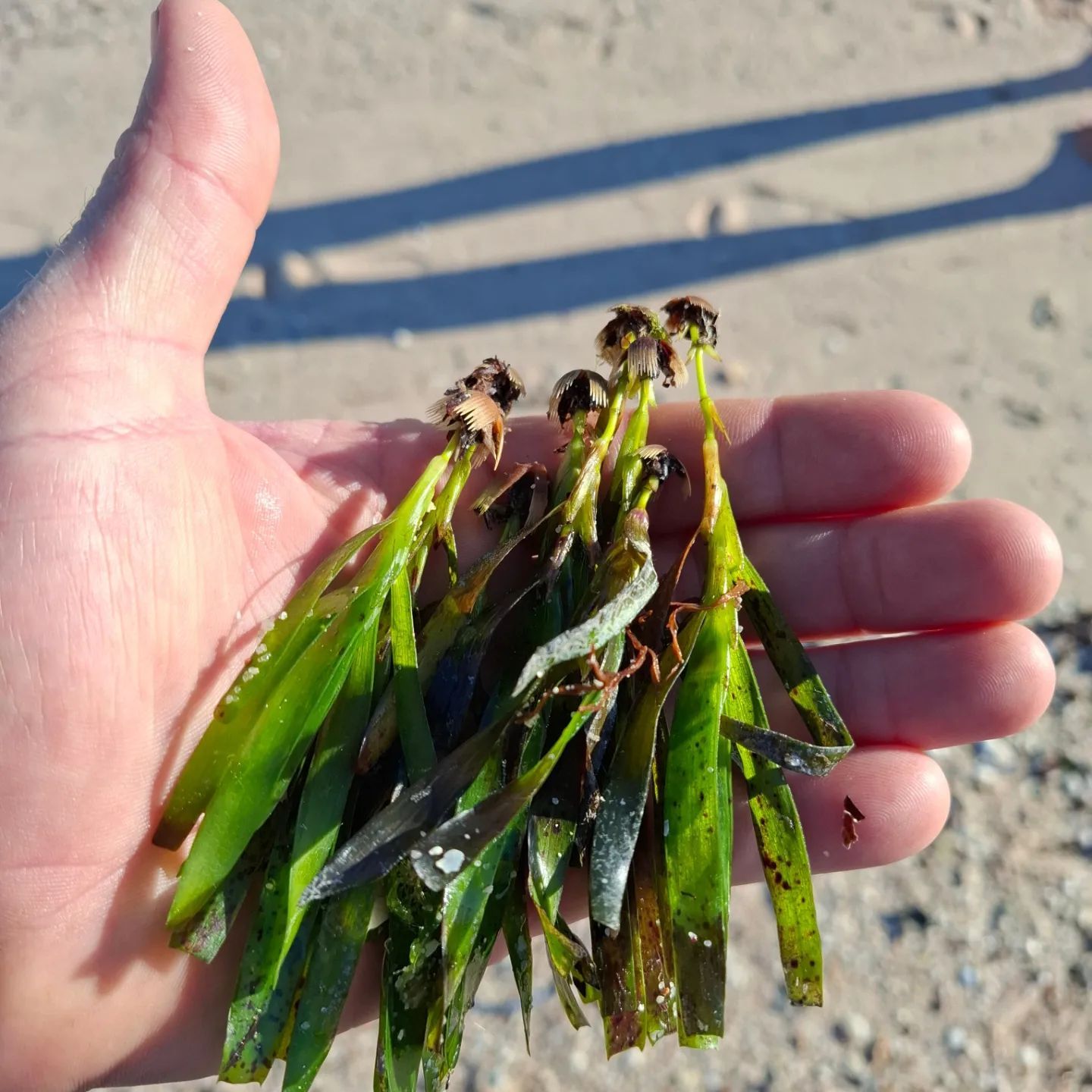
Shark Bay Seagrass Progress
By Jade Standen May 5, 2025
2025 Monkey Mia Seagrass Restoration is set to begin on the 16th of May
December 18, 2024
2024 Seagrass Restoration
October 18, 2024
Monkey Mia Seagrass Restoration
May 28, 2024
Shark Bay seabeds a ticking time bomb